
Quail Call Lots 1–3: A 38-Acre Lifestyle Block With Water and Power Already There
By Rodger Ford · October 14, 2026 · 7 min read
Thirty-eight acres along State Route 80, a 600-foot well already drilled, and power at the property line. Here is how Quail Call Lots 1, 2 and 3 can become five ready-to-build lifestyle blocks — and how a buyer can carve out a large homestead for well below its stand-alone cost.
Most rural land in southern Arizona comes with a catch: there is no water and no power. Before you can build anything you have to drill a well, bring in electricity and hope the numbers still work. Quail Call Lots 1, 2 and 3 at St. David Springs don’t have that problem. The well is drilled, the meter pedestal is in place, and the three lots sit side by side, so they can be bought together and planned as one property.
What is a lifestyle block?
A lifestyle block is a small rural property — usually somewhere between 2 and 60 acres — used for country living and small-scale farming rather than as a full-time agricultural business. The owners usually earn their living elsewhere. They buy the land for room to breathe, a few animals, a big garden, and a place where children grow up with chores, responsibility and a connection to the land.
Demand for this kind of property is strong, but supply is thin. Good lifestyle blocks need three things that raw desert land rarely has: legal access, water and power. Quail Call has all three within reach.
- Space to breathe. Leave cramped lots behind for open land with mountain views.
- A water-rich valley. David sits in the spring-fed San Pedro River Valley, with shallow static water levels.
- Room to raise a family. Space for a small farm, animals and the work ethic that comes with them.
The property: Quail Call Lots 1, 2 and 3
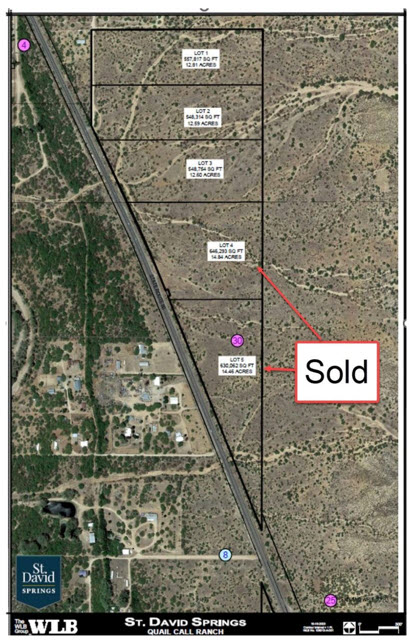
Quail Call Ranch plat (WLB Group). Lots 1–3 sit together at the north end; Lots 4 and 5 have sold.
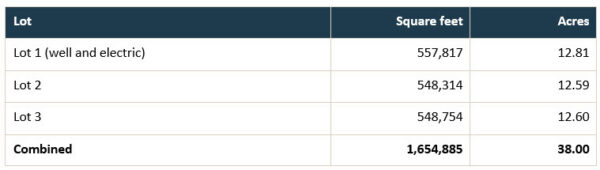
The asset that changes the math: a 600-foot well
The well sits in the northeast corner of Lot 1. It is 600 feet deep, with a 6-inch casing and a static water level of 41 feet — water stands within about 41 feet of the surface in a hole that goes down 600 feet. That is a very good well by any standard. Electric service is right next to it.
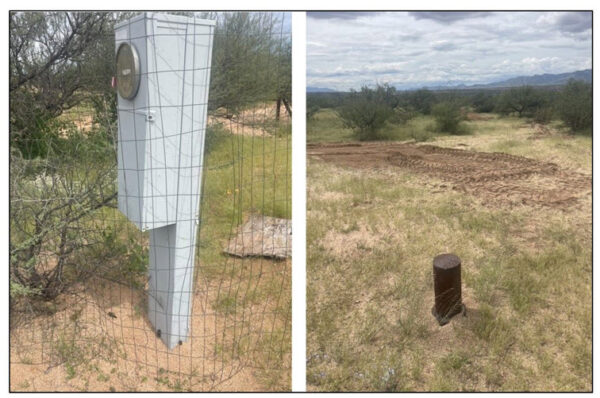
On site today: the electric meter pedestal (left) and the 6-inch well casing (right).
Replacing it would not be cheap. Our companion study, The Whole Is Greater Than the Sum of Its Parts, puts a new 600-foot, 6-inch steel-cased well at about $74,000 (range $53,500–$108,000) for the hole, casing and permits alone — before the pump, the power or any pipe. A finished well with power next to it is rare, and it is the reason this property can be divided at all.
The plan: combine, divide, supply, sell
Under Cochise County’s Minor Land Division (MLD) process, a parcel can be split into five or fewer lots when any of them is 10 acres or smaller. The county’s goal is orderly growth: every new lot must meet the minimum size for its zoning district, have legal access, be reachable by an ordinary two-wheel-drive car, and carry the easements needed for utilities.
That points to a straightforward plan:
- Buy all 38 acres — Lots 1, 2 and 3 together.
- Divide into up to five lots through the MLD process: four lifestyle blocks of roughly 2.5 acres or more, plus one large homestead parcel of 20+ acres.
- Run water and power to each lot from the existing well and electric service, under a recorded shared-well agreement.
- Sell four lots and use the proceeds to bring down your cost basis in the land you keep.
- Consider selling water to the neighboring Lot 4, adding a connection fee and a share of operating costs.
The result: a large homestead with water and power, carried at a fraction of what it would cost on its own, while four other families get serviced lifestyle blocks they could not find elsewhere.
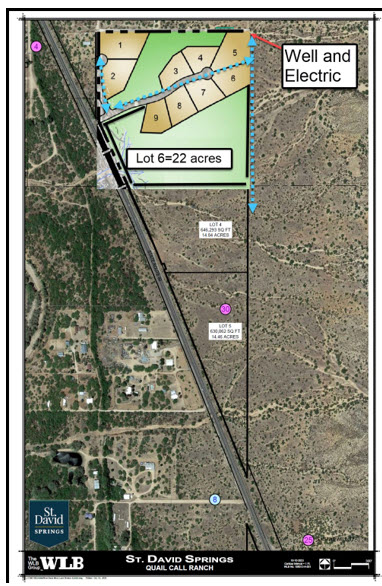
An early concept plan (WLB Group) showing nine small lots and a 22-acre lot, with water and power running from the well along the internal road.
Why five lots, not nine?
The concept plan above shows nine lots. It shows how the land can lay out, but nine lots is a full subdivision, with a longer approval process, engineered improvements and much higher costs. Five lots keeps the project inside the simpler Minor Land Division process and well within the limits of a shared well. Under Arizona law, six or more lots where any lot is under 36 acres is generally treated as a subdivision, so talk to Cochise County Development Services early if you want more than five.
Sharing the well: the rules that matter
The size cap
According to the Arizona Department of Water Resources, a shared well may serve up to 14 service connections or up to 24 residents. Once it serves 15 or more connections, or 25 or more people year-round, it becomes a community water system, which comes with drinking-water testing and reporting rules.
The resident count is usually the limit you hit first. Five homes at about 2.5 people each is roughly 12–13 residents, well under the cap. If you add guest houses or ADUs, or sell water to Lot 4, count people, not just houses, and plan around the 24-resident limit.
Pump limits
A household well in Arizona is generally an exempt well if its pump can deliver no more than 35 gallons per minute. A 6-inch well with a pump at or under 35 gpm is normal for a shared domestic well. The usual setup is to pump from the well into a storage tank and supply the homes from the tank. This keeps pressure steady and saves the pump from cycling on and off every time someone runs a tap.
The shared-well agreement
Arizona law governs how and where a well is drilled, not how owners share one. A shared-well agreement is a private contract. No state agency enforces it or settles disputes about it, so it needs to be written well and recorded. A good agreement includes:
- Recorded access and pipeline easements across each parcel
- The ownership share for each lot
- A separate meter and shutoff valve for each connection
- How fixed and variable costs are billed
- A repair-and-replacement reserve, with maintenance and replacement paid from that reserve
- How new members join or leave
- What happens when a lot is sold
Paying for it fairly
Co-owners split the real costs: pump power, repairs, water testing, contributions to the reserve, and recovery of the original acquisition and capital cost. Costs can be shared by metered usage or in equal shares, and the agreement should say which.
Practical points
- Keep about 100 feet between the well and any septic tank or leach field. Plan septic locations before you draw lot lines.
- Even with water standing at 41 feet, pumping from a 600-foot well for five or six households wears on the pump. Budget for a storage tank and a replacement reserve from the first day.
- The University of Arizona Cooperative Extension guide Shared Water Wells in Arizona (AZ1810) is the best plain-English reference for owners.
Frequently asked questions
How many lots can Quail Call Lots 1–3 be divided into?
Up to five through Cochise County’s Minor Land Division process, subject to the minimum lot size for the zoning district, legal and physical access, and utility easements. More than five lots generally requires full subdivision approval.
How many homes can share one well in Arizona?
A shared well may serve up to 14 service connections or up to 24 residents. At 15 or more connections, or 25 or more year-round residents, it becomes a community water system subject to drinking-water regulations.
What is the existing well worth?
The Lot 1 well is 600 feet deep with a 6-inch casing and a 41-foot static water level. A comparable new well costs about $74,000 for drilling, casing and permits alone, based on 2026 planning estimates. Pump, power and distribution are extra.
Who enforces a shared-well agreement?
No state agency does. It is a private contract between the owners, and disputes are civil matters, which is why easements, cost formulas and decision rules should be written down and recorded.
Ready-made wells near power are rare
Most buyers of rural land spend their first year and a large share of their budget getting water and power to the site. At Quail Call Lots 1, 2 and 3, that work is already done. Combine the three lots, divide them carefully, and the existing well and electric service can support up to five families on their own lifestyle blocks, including yours.
Want to walk the land or see the well records? Contact the St. David Springs sales office at Anthem Equity in Tucson, call 520-906-7575, or visit stdavidsprings.com.
This article is for general information and planning only. It is not legal, engineering, or appraisal advice. Lot counts, sizes and layouts are conceptual and subject to Cochise County approval. Well data and cost figures are planning estimates. Buyers should verify zoning, water rights, well records and all regulatory requirements independently.